
Courses on this page 22

The low-cost route into the profession
Start your career with NISM certifications, for about ₹9,000
You don’t need a large upfront investment to start a career in wealth management. NISM certifications are the qualifications SEBI requires for people who sell or advise on investment products in India. Each exam costs ₹1,500, NISM gives you the study material free when you enrol, and after the very first one you can start working and earning.
NISM route
₹1,500 per exam
About ₹9,000 for all six exams · free NISM workbooks · self-study or a short, low-cost course
- 1
Start earning
NISM V-A · Mutual Fund Distributors
Register with AMFI for an ARN and start distributing mutual funds. This is the first certificate most people take.
- 2
Widen what you offer
NISM V-D · NISM XXI-A · SIFs and PMS distribution
Add Specialized Investment Funds and Portfolio Management Services for more affluent clients.
- 3
Add retirement planning
NISM XVII · Retirement Adviser (PFRDA)
Guide clients on NPS and building retirement income.
- 4
Move into paid advice
NISM X-A · NISM X-B · Investment Adviser, Levels 1 and 2
With a graduate degree, apply to SEBI to register as an Investment Adviser (RIA) and charge fees for advice. Other registration conditions apply.
Then build towards CFP®. Many professionals start here, build clients and an income, and go on to study for CFP® with real client experience behind them.
- Exam fees
- ₹1,500 each about ₹9,000 for all six
- Starting salary
- ₹6 – 10.5 LPA
- After 5 years
- ₹18 – 32+ LPA plus performance-linked incentives
Core competencies: asset allocation, risk profiling, Specialized Investment Funds (SIFs) and alternatives, tax planning and retirement planning. Target roles: mutual fund distributor, private wealth manager, SEBI Registered Investment Adviser (RIA), family office associate, wealth strategist.
Exam fee as published by NISM: ₹1,500 per mandatory certification exam, all-inclusive (payment gateway charges extra). NISM certificates are generally valid for three years.
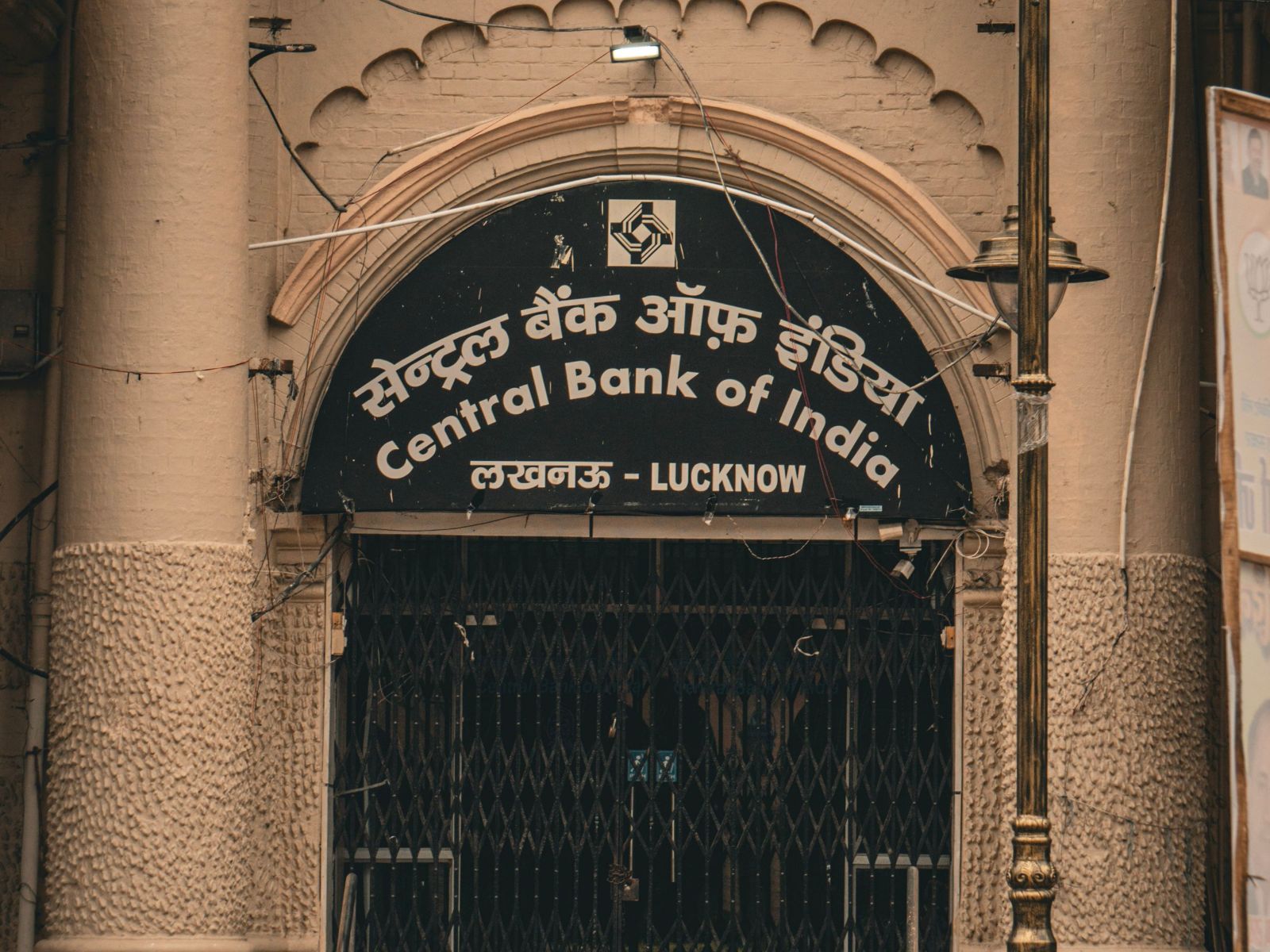
Short term banking courses
Short term courses in finance for students and graduates who want to start their career in a bank or NBFC. Each takes two to six months.
Credit
Commercial Banking & Credit Analyst (CBCA)
An applied programme in lending: SME and corporate underwriting, credit ratings and balance-sheet stress testing.
- Duration
- 3 – 6 months
- Starting salary
- ₹5.5 – 8.5 LPA
- After 5 years
- ₹14 – 22 LPA
Who can join
- No minimum qualification. Anyone can enrol in CFI’s CBCA programme.
What you’ll learn
Reading financial statements for credit risk, DSCR and interest cover, cash-flow models that test repayment under stress, loan structuring, covenants, guarantees, collateral valuation, insolvency, restructuring and early warning signs of default.
Career outcome
- Target roles: Credit analyst, underwriting associate, commercial lending manager, risk assessment officer
- Day-to-day work: Drafting credit approval memos, reviewing audited accounts, visiting borrowers and recommending loan sanctions.
- Hiring entities: Corporate banking teams at private banks, rating agencies such as CRISIL, ICRA and CARE, and lending NBFCs such as Tata Capital and Bajaj Finance.
Fees & preparation
- Board / exam fee: ₹40,000 – ₹45,000 (About $497 – $597 for self-study access)
- Training / prep fee: Included
- Issued by: Corporate Finance Institute (CFI)
- How to prepare: Self-paced online learning on the provider’s portal.
Banking
Diploma in Banking & Finance (DB&F)
IIBF’s diploma for non-bankers, covering the Indian financial system, banking principles and practice, accounting for bankers and banking law. IIBF treats it as equivalent to JAIIB, and the Indian Banks’ Association lists it as a desirable qualification for bank recruitment.
- Duration
- 3 – 6 months
- Starting salary
- ₹4 – 7 LPA
- After 5 years
- ₹9 – 15 LPA
Who can join
- Class 12 pass in any stream, or a pass in IIBF’s BC/BF exam.
- Only for non-bankers. Employees of banks and financial institutions cannot take DB&F; they take JAIIB instead.
- You get five attempts within three years of registering.
What you’ll learn
Banking operations, deposits and clearing, KYC and anti-money-laundering rules, RBI regulation including CRR and SLR, credit appraisal, working capital assessment, NPA management under the SARFAESI Act, negotiable instruments, the banker–customer relationship and foreign exchange basics.
Career outcome
- Target roles: Probationary Officer, Assistant Manager (retail assets or liabilities), banking operations executive, customer relationship officer
- Day-to-day work: Processing retail loans, assessing small business credit, running front-desk branch operations and handling compliance issues.
- Hiring entities: Private and public sector banks such as HDFC Bank, ICICI Bank, Axis Bank, Federal Bank and Kotak Mahindra Bank, and NBFCs.
Fees & preparation
- Board / exam fee: ₹3,500 for the first attempt; ₹1,300 for each further attempt (plus convenience charges and taxes as applicable; source: IIBF DB&F Rules & Syllabus 2026)
- Training / prep fee: ₹2,500 – ₹8,000
- Issued by: Indian Institute of Banking & Finance (IIBF)
- How to prepare: Self-study with the official IIBF (Macmillan) books, or prep platforms such as Oliveboard and Adda247.
Operations
Retail Banking Operations & Trade Finance
A practical programme on retail deposits and loans, letters of credit, bank guarantees and cross-border trade.
- Duration
- 2 – 4 months
- Starting salary
- ₹4 – 6.5 LPA
- After 5 years
- ₹10 – 16 LPA
Who can join
- For IIBF’s Certificate in International Trade Finance: Class 12 pass in any stream.
- Open to bank employees and non-bankers.
What you’ll learn
Incoterms, UCP 600, international trade settlement, domestic and international remittances, collections, trade credit, core banking software such as Finacle or BaNCS, compliance, currency chest management and clearing.
Career outcome
- Target roles: Trade finance executive, branch operations officer, international remittances associate, service desk manager
- Day-to-day work: Checking import and export documents, managing bill collections and running transaction audits.
- Hiring entities: Multinational banks such as Standard Chartered, Citi and HSBC, private sector banks and export–import firms.
Fees & preparation
- Board / exam fee: ₹5,000 – ₹12,000
- Training / prep fee: ₹10,000 – ₹25,000
- Issued by: IIBF, the International Chamber of Commerce (ICC) or banking academies
- How to prepare: Register with IIBF, or join a recognised programme such as Manipal School of Banking.

Finance courses after 12th
Courses you can start after school or in your first year of college.
Introductory
Investment Foundations Certificate (CFA Institute)
A self-paced online introduction to the investment industry, ethics, economics and the main asset classes.
- Duration
- 1 – 2 months
- Starting salary
- ₹3 – 4.5 LPAHigher pay usually comes with a further professional credential
- After 5 years
- ₹7.5 – 11 LPA
Who can join
- No prerequisites. Anyone can enrol.
What you’ll learn
The roles of investment banks, asset managers, custodians and regulators, equities, bonds, derivatives, alternatives, how interest rates, inflation and jobs data move markets, regulation, client confidentiality and fiduciary duty.
Career outcome
- Target roles: Client servicing assistant, junior research operations assistant, finance data analyst
- Day-to-day work: Collecting market data, supporting operations desks and updating investment summaries.
- Hiring entities: Asset management companies and financial research firms such as FactSet and S&P Global.
Fees & preparation
- Board / exam fee: $0 – $350
- Training / prep fee: ₹0 – ₹10,000
- Issued by: CFA Institute (USA)
- How to prepare: Self-paced on the CFA Institute portal.
Excel & valuation
Financial Modelling & Valuation
Spreadsheet-based courses in three-statement models, DCF, comparable company analysis and scenario forecasting.
- Duration
- 2 – 4 months
- Starting salary
- ₹4 – 6.5 LPA
- After 5 years
- ₹12 – 18 LPA
Who can join
- No minimum qualification for CFI’s FMVA or the Financial Modeling Institute’s AFM exam. Working knowledge of Excel and basic accounting is expected.
What you’ll learn
Three-statement models built from annual reports, forecasts for revenue, costs, working capital and depreciation, DCF valuation (FCFF and FCFE), WACC, sensitivity tables and relative valuation.
Career outcome
- Target roles: Financial analyst, equity research trainee, junior valuation analyst
- Day-to-day work: Entering historical data, calculating ratios, maintaining models and building pitch charts.
- Hiring entities: Equity research firms, small advisory firms, financial research outsourcing firms and corporate finance teams.
Fees & preparation
- Board / exam fee: ₹20,000 – ₹50,000
- Training / prep fee: ₹10,000 – ₹30,000
- Issued by: Independent providers; the Financial Modeling Institute (FMI) awards the AFM credential
- How to prepare: CFI, Wall Street Prep, Coursera or edX.
Regulatory
NISM Series V-D & Series XVII
Two NISM exams: Series V-D for mutual fund and Specialized Investment Fund (SIF) distributors, launched in July 2026, and Series XVII for retirement advisers registered with PFRDA.
- Duration
- 1 – 2 months
- Starting salary
- ₹3 – 4.8 LPAPlus trail commission if you build your own client base
- After 5 years
- ₹9 – 15+ LPA
Who can join
- No age or education requirement. Anyone can take NISM exams.
- To work as a mutual fund distributor you also need an ARN from AMFI; retirement advisers must register with PFRDA.
What you’ll learn
How mutual funds and SIFs work, RTAs, NAVs, distribution rules, the National Pension System, its tiers, tax treatment and contributions, retirement corpus calculations with inflation and annuities, KYC, Central KYC and anti-money-laundering rules.
Career outcome
- Target roles: Mutual fund distributor, operations executive at an RTA, retirement planning executive
- Day-to-day work: Onboarding investors, processing SIPs, running retirement calculations and filing compliance reports.
- Hiring entities: AMCs such as SBI and HDFC Mutual Fund, RTAs such as CAMS and KFintech, and distribution firms.
Fees & preparation
- Board / exam fee: ₹2,700 (Series V-D ₹1,200 + Series XVII ₹1,500)
- Training / prep fee: ₹0 – ₹5,000
- Issued by: National Institute of Securities Markets (NISM)
- How to prepare: Official NISM workbooks and mock tests.
US tax
Enrolled Agent (EA) – US Tax
A three-part IRS exam (Individuals; Businesses; Representation, Practices and Procedures) on the US tax code.
- Duration
- 6 – 9 months
- Starting salary
- ₹4.5 – 6.5 LPA
- After 5 years
- ₹11 – 18 LPA
Who can join
- The IRS sets no education or age requirement.
- You need a PTIN (Preparer Tax Identification Number), must pass all three parts within three years, and must clear the IRS suitability check, which covers tax compliance and criminal background.
What you’ll learn
US individual returns (Form 1040), deductions and credits, business returns (Schedule C, Form 1065 and Forms 1120/1120-S), audits, collection appeals, penalty relief, FBAR, FATCA and foreign tax credits.
Career outcome
- Target roles: US tax analyst, senior tax associate, cross-border tax consultant
- Day-to-day work: Reviewing W-2, 1099 and K-1 forms, preparing federal and state returns and replying to IRS notices.
- Hiring entities: Big 4 US tax teams, firms such as BDO, Grant Thornton and Ryan, and US-focused CPA firms.
Fees & preparation
- Board / exam fee: ₹55,000 – ₹60,000 (PTIN (about $30) + about $206 for each of the three parts)
- Training / prep fee: ₹25,000 – ₹45,000
- Issued by: Internal Revenue Service (IRS, US Treasury)
- How to prepare: Fast Forward Academy, Gleim, Hock or self-study.
Corporate law
Company Secretary (CS) – CSEET
The CS Executive Entrance Test covers business communication, legal aptitude, logical reasoning and current affairs.
- Duration
- 3 – 6 months
- Starting salary
- ₹3.5 – 5.5 LPAAfter clearing the Executive or Professional stage
- After 5 years
- ₹12 – 20 LPA
Who can join
- Class 12 passed or appearing, in any stream. Only Indian nationals can take CSEET.
- Graduates, postgraduates and final-year undergraduate students do not need CSEET and can register directly for CS Executive. So can CS Foundation, CA Intermediate and CMA Final pass students.
What you’ll learn
India’s legal framework, the basics of corporate law, the Companies Act, secretarial audit, governance rules, drafting resolutions, notices and simple agreements, and SEBI listing regulations (LODR).
Career outcome
- Target roles: Compliance trainee, secretarial assistant, junior corporate legal officer
- Day-to-day work: Filing on the MCA21 portal, maintaining statutory registers and supporting board meetings.
- Hiring entities: Listed companies, mid-sized business houses and corporate law consultancies.
Fees & preparation
- Board / exam fee: ₹1,500 (CSEET registration and exam fee)
- Training / prep fee: ₹8,000 – ₹18,000
- Issued by: The Institute of Company Secretaries of India (ICSI)
- How to prepare: Register with ICSI and use its study material or online coaching.
Accounting
Chartered Accountancy (CA)
India’s qualification in accounting, audit and tax, awarded by ICAI. You pass three exam levels (Foundation, Intermediate and Final), complete two years of articleship (practical training under a practising CA) and ICAI’s compulsory training courses.
- Duration
- About 4.5 – 5 years after Class 12, including two years of articleship
- Starting salary
- ₹10,000 – 25,000 a monthArticleship stipend; ₹9 – 14 LPA once qualified as a CA
- After 5 years
- ₹20 – 35+ LPA
Who can join
- You can register for CA Foundation after passing Class 10 (provisional registration).
- You can sit the Foundation exam only after appearing for the Class 12 board exam.
- Graduates can skip Foundation and join CA Intermediate directly: commerce graduates with 55% or more, other graduates with 60% or more.
What you’ll learn
Accounting, business laws, quantitative aptitude and economics at Foundation; advanced accounting, corporate laws, income tax and GST, cost and management accounting, auditing, financial management and strategic management at Intermediate; and financial reporting, advanced financial management, advanced auditing, direct and international tax, indirect tax and an integrated business case paper at Final.
Career outcome
- Target roles: Articled assistant during training; after qualifying, statutory auditor, tax consultant, financial controller or finance manager
- Day-to-day work: Statutory audits, advance tax calculations, GST returns and balance-sheet reviews.
- Hiring entities: The Big 4 (EY, PwC, Deloitte, KPMG), Indian accounting firms and public sector undertakings.
Fees & preparation
- Board / exam fee: ₹56,500 for all three levels (Foundation ₹9,000 registration + ₹1,500 exam; Intermediate ₹18,000 + ₹2,700; Final ₹22,000 + ₹3,300; exam fees for both groups)
- Training / prep fee: ₹20,000 – ₹45,000 for Foundation coaching; Intermediate and Final coaching is charged separately by each institute
- Issued by: The Institute of Chartered Accountants of India (ICAI)
- How to prepare: ICAI’s free study material, or coaching for each level from institutes such as J.K. Shah, Aldine or Swapnil Patni.
Global accounting
ACCA – Applied Knowledge
The first level of the UK’s ACCA qualification: Business and Technology, Management Accounting and Financial Accounting. Read our full guide →
- Duration
- 6 – 12 months
- Starting salary
- ₹4 – 6 LPA
- After 5 years
- ₹12 – 18 LPA
Who can join
- Class 12 pass (CBSE, ICSE or state board) in five subjects, including English and Mathematics.
- If you do not meet this, you can start at ACCA’s foundation-level diploma, which has no entry requirement.
What you’ll learn
Preparing financial statements under IFRS, standard costing, marginal costing, variance analysis, financial controls, governance, professional ethics, trial balances and ledgers in accounting software.
Career outcome
- Target roles: Junior finance assistant, audit associate, general ledger accountant, accounts payable or receivable specialist
- Day-to-day work: Bank reconciliations, month-end closing under IFRS and expense variance reports.
- Hiring entities: Finance and accounting offices that multinational companies run in India, such as Barclays, Genpact and Wipro, and the Indian offices of the Big 4 firms.
Fees & preparation
- Board / exam fee: ₹40,000 – ₹50,000 (About £89 registration + £134 annual subscription + £98 – £120 per paper)
- Training / prep fee: ₹20,000 – ₹40,000
- Issued by: Association of Chartered Certified Accountants (ACCA, UK)
- How to prepare: ACCA Approved Learning Partners such as Kaplan, BPP, Miles Education or IMS Proschool, or self-study.
Management accounting
US CMA (Certified Management Accountant)
A two-part programme on internal finance: financial planning, performance and analytics (Part 1) and strategic financial management (Part 2).
- Duration
- 6 – 9 months
- Starting salary
- ₹4.5 – 7 LPA
- After 5 years
- ₹13 – 20 LPA
Who can join
- No qualification is needed to take the exams; you can sit both parts while still in college.
- To be awarded the CMA: a bachelor’s degree, two years of relevant work experience and IMA membership. The degree and experience can be completed within seven years of passing the exams.
What you’ll learn
Budgets, forecasts, resource allocation, activity-based and target costing, ratio analysis, profitability, economic value added, risk management and internal controls under the Sarbanes-Oxley Act.
Career outcome
- Target roles: Cost accounting associate, junior financial analyst, financial reporting analyst, FP&A associate
- Day-to-day work: Tracking budget variances, updating forecasts, costing production and preparing performance decks.
- Hiring entities: Indian finance offices of large American companies such as Amazon, Caterpillar and Ford, and global technology companies.
Fees & preparation
- Board / exam fee: ₹90,000 – ₹1,20,000 (IMA membership + entrance fee + exam fee for each part)
- Training / prep fee: ₹40,000 – ₹80,000
- Issued by: Institute of Management Accountants (IMA, USA)
- How to prepare: Becker, Wiley, Miles Education or Gleim.

Finance courses after graduation
Professional certifications for graduates and working professionals.
Regulatory
NISM Series X-A, X-B & XXI-A
Investment Adviser Level 1 and Level 2 (Series X-A and X-B), which SEBI requires for registered investment advisers, plus Series XXI-A for distributors of Portfolio Management Services.
- Duration
- 3 – 6 months
- Starting salary
- ₹6 – 10 LPA
- After 5 years
- ₹18 – 32 LPA
Who can join
- No age or education requirement to take the exams.
- To register with SEBI as an individual investment adviser: a graduate degree in any discipline plus the NISM X-A and X-B certificates (rules in force since December 2024).
What you’ll learn
SEBI (Investment Advisers) Regulations, PMS rules, risk profiling, investment policy statements, portfolios across equity, bonds, AIFs and SIFs, client onboarding, fee rules and keeping advice separate from distribution.
Career outcome
- Target roles: SEBI-registered investment adviser, wealth management associate, PMS relationship manager
- Day-to-day work: Risk profiling clients, building and rebalancing portfolios and keeping SEBI records.
- Hiring entities: Private wealth firms, registered advisory firms, PMS houses and multi-family offices.
Fees & preparation
- Board / exam fee: ₹6,000 (X-A ₹1,500 + X-B ₹1,500 + XXI-A ₹3,000)
- Training / prep fee: ₹5,000 – ₹15,000
- Issued by: National Institute of Securities Markets (NISM)
- How to prepare: Official NISM workbooks and mock exams.
Deals
Investment Banking Certification
A deal-focused programme in valuation, capital markets, M&A and leveraged buyouts.
- Duration
- 3 – 6 months
- Starting salary
- ₹8 – 15 LPAExcluding deal bonuses
- After 5 years
- ₹25 – 45+ LPA
Who can join
- No formal entry requirement for programmes such as those from CFI, Wall Street Prep or NYIF. A finance or accounting background is expected.
What you’ll learn
LBO models, IRR, cash returns, debt schedules, merger analysis, accretion and dilution, enterprise value, information memorandums, pitch books, teasers, target screening, data rooms and due diligence.
Career outcome
- Target roles: Investment banking analyst, M&A associate, corporate development associate, transaction advisory analyst
- Day-to-day work: Pitch decks, valuations, due diligence lists and work with legal advisers.
- Hiring entities: Global banks such as Morgan Stanley, Goldman Sachs and Jefferies, Indian banks such as Kotak Investment Banking, Avendus and Axis Capital, and Big 4 deal teams.
Fees & preparation
- Board / exam fee: ₹30,000 – ₹70,000
- Training / prep fee: ₹40,000 – ₹1,20,000
- Issued by: Independent providers such as NYIF, Wall Street Prep and CFI
- How to prepare: Self-paced courses or intensive bootcamps.
Alternatives
CFA Institute Certificates: ESG & Private Markets
Two short certificates: ESG Investing, and Private Markets (private equity, private debt, real estate and infrastructure).
- Duration
- 3 – 6 months
- Starting salary
- ₹6.5 – 10 LPA
- After 5 years
- ₹18 – 30 LPA
Who can join
- No prerequisites. Anyone can enrol.
What you’ll learn
Material ESG risks, disclosure rules such as SFDR, TCFD and BRSR, private equity deals, earn-outs, waterfalls, private debt terms from senior secured to mezzanine, and adding ESG factors and carbon exposure to valuations.
Career outcome
- Target roles: ESG analyst, private equity research associate, sustainable investment strategist
- Day-to-day work: ESG assessments, screening private equity targets, reviewing credit term sheets and drafting disclosure notes.
- Hiring entities: Private equity firms, pension funds, ESG research firms such as MSCI and Sustainalytics, and asset managers.
Fees & preparation
- Board / exam fee: ₹71,000 – ₹74,000 (ESG Investing about $860; Private Markets about $890)
- Training / prep fee: ₹10,000 – ₹25,000
- Issued by: CFA Institute (USA)
- How to prepare: Self-study on the CFA Institute platform.
Performance
CIPM® (Certificate in Investment Performance Measurement)
A specialist credential in performance attribution, manager selection, risk measurement and GIPS® compliance.
- Duration
- 6 – 12 months
- Starting salary
- ₹6 – 9.5 LPA
- After 5 years
- ₹15 – 24 LPA
Who can join
- No entry requirement for Level I. CFA charterholders and CFA Level III passers can start at Level II.
- To use the CIPM designation you must pass both levels and become a regular member of CFA Institute, which requires relevant work experience.
What you’ll learn
Brinson attribution for allocation and selection, Sharpe, Treynor, information and Sortino ratios, GIPS compliance and verification, and factor attribution by style, sector and region.
Career outcome
- Target roles: Performance attribution analyst, GIPS verification specialist, investment risk and performance associate
- Day-to-day work: Performance reports, attribution analysis, benchmark checks and reviewing marketing claims.
- Hiring entities: Asset managers, custodian banks such as State Street and BNY Mellon, sovereign funds and mutual funds.
Fees & preparation
- Board / exam fee: ₹40,000 – ₹65,000 (About $490 – $790 for exam and curriculum)
- Training / prep fee: ₹15,000 – ₹30,000
- Issued by: CFA Institute (USA)
- How to prepare: Self-paced on the CFA Institute platform.
Risk
FRM® (Financial Risk Manager)
A two-part exam on market, credit, operational, liquidity and treasury risk. Read our full guide →
- Duration
- 1 – 2 years
- Starting salary
- ₹7.5 – 13 LPA
- After 5 years
- ₹20 – 35 LPA
Who can join
- No education or work requirement to register.
- To be certified: pass Part I and Part II, then show two years of full-time work experience in financial risk. Internships and part-time jobs during college do not count.
What you’ll learn
Value at Risk, Expected Shortfall, credit risk models, default probability, CVA, stress tests, model back-testing, liquidity ratios and Basel capital rules.
Career outcome
- Target roles: Risk manager, credit risk modeller, market risk analyst, treasury risk associate
- Day-to-day work: Monitoring desk limits, stress-testing loan books, validating models and reporting risk capital.
- Hiring entities: Banks such as JPMorgan, Citi, HSBC and SBI, rating agencies and consulting firms.
Fees & preparation
- Board / exam fee: ₹1,30,000 – ₹1,70,000 ($400 enrolment + $600 – $800 for each part)
- Training / prep fee: ₹25,000 – ₹50,000 per part
- Issued by: Global Association of Risk Professionals (GARP, USA)
- How to prepare: GARP books, or Bionic Turtle, Schweser or AnalystPrep.
Wealth management
CWM® (Chartered Wealth Manager)
A wealth-advisory credential covering behavioural finance, wealth transfer, asset protection and estate planning for affluent clients. Read our full guide →
- Duration
- 3 – 12 months
- Starting salary
- ₹6 – 9.5 LPA
- After 5 years
- ₹16 – 28 LPA
Who can join
- Class 12 pass to enrol.
- A graduate degree to be awarded the charter.
What you’ll learn
Managing relationships with HNI and ultra-HNI clients, asset protection with trusts and family governance, behavioural finance when markets fall, real estate, private debt and other alternatives.
Career outcome
- Target roles: Private banker, senior wealth consultant, family office relationship director
- Day-to-day work: Managing client relationships, setting asset allocation, introducing specialised funds and coordinating estate plans.
- Hiring entities: Private banking teams, multi-family offices and private wealth firms.
Fees & preparation
- Board / exam fee: ₹66,080 – ₹1,10,920 (Total to certification incl. GST: self-paced or with live classes (Levels I and II))
- Training / prep fee: Included
- Issued by: American Academy of Financial Management (AAFM)
- How to prepare: AAFM-authorised training centres or self-study.
Financial planning
CFP® – CERTIFIED FINANCIAL PLANNER®
The global mark of excellence in financial planning, awarded in India by FPSB India. It covers investments, insurance, retirement, tax and estate planning, and ends in a full financial plan. Read our full guide →
- Duration
- 6 months – 2 years
- Starting salary
- ₹5.5 – 8.5 LPA
- After 5 years
- ₹15 – 25+ LPA
Who can join
- You can enrol from age 18 after passing Class 12.
- To be certified: a graduate degree, Indian residency, relevant work experience, and all courses and exams completed.
- Holders of qualifications such as CA, CFA, CMA, CS or ACCA can take the shorter Fast Track pathway.
What you’ll learn
Complete financial plans built around life goals and cash flow, asset allocation across debt, equity and alternatives, insurance needs, human life value, health cover, wills, trusts, powers of attorney and business succession.
Career outcome
- Target roles: Financial planner, wealth advisory lead, private wealth manager, family office associate
- Day-to-day work: Client discovery meetings, writing financial plans, goal calculations and rebalancing portfolios.
- Hiring entities: Wealth management firms, private banks, financial planning firms and independent advisory practices.
Fees & preparation
- Board / exam fee: ₹1,20,500 + GST (Regular pathway. Fast Track is ₹84,000 + GST. Figures from FPSB India)
- Training / prep fee: ₹25,000 – ₹60,000
- Issued by: FPSB India (Financial Planning Standards Board India)
- How to prepare: An FPSB India education provider, or self-study.
Corporate finance
Certified Corporate FP&A Professional (FPAC)
Corporate financial planning and analysis: analysis and projections (Part 1) and business partnering and strategy (Part 2).
- Duration
- 6 – 12 months
- Starting salary
- ₹6.5 – 9 LPA
- After 5 years
- ₹16 – 26 LPA
Who can join
- To enrol: a bachelor’s degree in any subject, or be studying for a finance, business or accounting degree and within two years of graduating.
- To be certified: two years of full-time FP&A work if you have a relevant master’s degree, otherwise three years. Both conditions must be met within five years of applying.
What you’ll learn
Annual operating plans, rolling forecasts, variance analysis, revenue modelling, working with sales, product and marketing on pricing and returns, dashboards and board-level presentations.
Career outcome
- Target roles: FP&A analyst, finance business partner, corporate financial analyst, commercial finance manager
- Day-to-day work: Tracking budgets, updating rolling models, analysing margins and preparing board packs.
- Hiring entities: Multinational companies, start-ups, software companies and the Indian finance offices of global firms.
Fees & preparation
- Board / exam fee: ₹82,000 – ₹1,25,000 (About $995 – $1,495, member or non-member)
- Training / prep fee: ₹25,000 – ₹45,000
- Issued by: Association for Financial Professionals (AFP, USA)
- How to prepare: AFP’s learning portal or corporate training partners.
Investments
CFA® Program – Levels I to III
Three exam levels covering quantitative methods, financial reporting, economics, equity, fixed income, derivatives, alternatives and portfolio management. Read our full guide →
- Duration
- 3 – 4 years for all three levels, with about 300 hours of study per level
- Starting salary
- ₹7 – 12 LPAAfter Level I or II; ₹14 – 22 LPA once you hold the charter
- After 5 years
- ₹22 – 40+ LPA
Who can join
- A bachelor’s degree, or be in your final years of college with your Level I exam falling within 23 months of your graduation month.
- Or 4,000 hours of work experience and/or higher education, built up over at least three years.
- A valid international passport.
- To be awarded the charter: pass all three levels and complete 4,000 hours of relevant work experience over at least 36 months.
What you’ll learn
Advanced financial statement analysis, valuing equities, bonds, securitised assets and options, building portfolios with asset allocation, factors and hedging, and the CFA Institute Code of Ethics and Standards.
Career outcome
- Target roles: Equity research analyst, fixed income portfolio manager, research associate at a mutual fund or investment firm
- Day-to-day work: Building sector models, writing initiation reports, meeting company managements and managing fund holdings.
- Hiring entities: Mutual funds, hedge funds, sovereign wealth funds, private equity firms and brokerages.
Fees & preparation
- Board / exam fee: USD 3,520 – 4,570 for all three levels (about ₹3.3 – 4.3 lakh) (CFA Institute’s total with early or standard registration; rupee figure at about ₹95 to the dollar)
- Training / prep fee: ₹30,000 – ₹70,000 per level
- Issued by: CFA Institute (USA)
- How to prepare: Official curriculum, or Kaplan Schweser, Wiley, Mark Meldrum or IFT.

Finance courses after post-graduation
For postgraduates, charterholders and experienced professionals.
Alternatives
CAIA® (Chartered Alternative Investment Analyst)
Two levels on alternative investments: the fundamentals (Level I) and current issues and practical application (Level II).
- Duration
- 1 – 1.5 years
- Starting salary
- ₹12 – 20 LPA
- After 5 years
- ₹35 – 60+ LPA
Who can join
- No requirement to register for the exams.
- To become a charterholder after Level II: a bachelor’s degree plus one year of relevant work experience, or four years of relevant work experience.
What you’ll learn
Hedge fund strategies (long/short, macro, event-driven and arbitrage), private capital, fund lifecycle, waterfalls, co-investment, real assets such as infrastructure, farmland and timber, and combining traditional and alternative assets in one portfolio.
Career outcome
- Target roles: Alternative investment strategist, private equity allocator, fund-of-funds lead, sovereign wealth analyst
- Day-to-day work: Due diligence on fund managers, reviewing limited partnership agreements and sizing alternative allocations.
- Hiring entities: Sovereign wealth funds, pension funds, multi-family offices, funds of funds and endowments.
Fees & preparation
- Board / exam fee: ₹2,40,000 – ₹2,70,000 ($400 enrolment + $1,250 – $1,395 for each level)
- Training / prep fee: ₹30,000 – ₹60,000 per level
- Issued by: CAIA Association (USA)
- How to prepare: Official curriculum, or UpperMark or Kaplan Schweser.
Leadership
Postgraduate Degree or Executive MBA in Finance
Degree programmes in corporate finance strategy, M&A, risk management, capital markets and governance.
- Duration
- 1 – 2 years
- Starting salary
- ₹18 – 30 LPA
- After 5 years
- ₹45 – 80+ LPA
Who can join
- A bachelor’s degree and a CAT, GMAT or GRE score (some schools run their own test).
- Executive MBAs also need full-time work experience; IIM Ahmedabad’s one-year PGPX, for example, asks for at least four years after graduation.
What you’ll learn
Capital structure, the cost of capital, restructuring, joint ventures, divestments, treasury, liquidity, finance transformation, capital budgeting and investor communication.
Career outcome
- Target roles: CFO, vice president of finance, corporate treasurer, managing director
- Day-to-day work: Allocating capital, negotiating credit lines, leading board reviews and directing growth investments.
- Hiring entities: Conglomerates, listed companies, technology companies and consulting firms.
Fees & preparation
- Board / exam fee: ₹15,00,000 – ₹40,00,000 (Tuition fee)
- Training / prep fee: ₹25,000 – ₹60,000
- Issued by: UGC / AICTE in India, or international accreditors such as AACSB, AMBA and EQUIS
- How to prepare: Business schools such as the IIMs, ISB, INSEAD and London Business School, via CAT, GMAT or GRE.
FAQs
Finance courses: FAQs
Quick answers on short term courses, bank jobs, NISM and how far to trust the fees and salaries on this page.
Which are the best short term courses in finance?
Short term courses in finance that take six months or less include NISM certifications (one to two months each), CFA Institute’s Investment Foundations (one to two months), IIBF’s trade finance certificate and financial modelling courses (two to four months), and the Diploma in Banking & Finance, CBCA, investment banking courses and the NISM investment adviser exams (three to six months). The best one depends on the job you want: banking diplomas for bank roles, NISM for mutual funds and advisory work, and financial modelling for analyst roles.
Can I do a short term finance course after 12th?
Yes. NISM exams have no age or education requirement, and Investment Foundations and most financial modelling courses are open to anyone. The Diploma in Banking & Finance and IIBF’s trade finance certificate need a Class 12 pass in any stream.
Which short course is best for getting into a bank?
The Diploma in Banking & Finance (DB&F) from the Indian Institute of Banking & Finance (IIBF) is built for non-bankers. IIBF treats it as equivalent to JAIIB, the exam serving bankers take, and the Indian Banks’ Association lists it as a desirable qualification for bank recruitment.
Can I become a SEBI Registered Investment Adviser with NISM Series X-A and X-B?
They are the required exams, but not the only requirement. Since SEBI’s December 2024 amendment, an individual adviser needs a graduate degree in any discipline from a recognised university, plus the NISM Series X-A and X-B certificates, and the earlier work-experience requirement has been removed. You also pay SEBI’s registration fees, keep a deposit with a scheduled bank (this replaced the old net-worth rule) and follow SEBI’s ongoing compliance rules.
How is an investment banking certification different from a financial modelling course?
A financial modelling course teaches you to build a model; an investment banking course teaches you to use that model on a live deal. Financial modelling covers three-statement models, revenue and cost forecasts, DCF valuation, WACC and comparable company analysis in Excel, and suits anyone heading into financial analysis, equity research or corporate finance. An investment banking course starts from those skills and adds deal work: leveraged buyout (LBO) models, merger and accretion–dilution analysis, IPOs and capital raising, pitch books, information memorandums and due diligence. It is aimed at investment banking, M&A and transaction advisory roles. Financial modelling courses take two to four months, with exam fees of ₹20,000 – ₹50,000 and training fees of ₹10,000 – ₹30,000. Investment banking programmes take three to six months, with certification fees of ₹30,000 – ₹70,000 and training fees of ₹40,000 – ₹1,20,000. If you are new to finance, start with financial modelling, and move to an investment banking course once you can build a model on your own.
Are these fees and salaries exact?
No. They are indicative ranges. Exam fees change with exchange rates and fee revisions, and salaries depend on your city, employer and experience. Check the official body’s website for current fees before you register.
Still deciding which course fits you?
Talk to an expert for free about eligibility, fees and the career you want.